MCR MV
Master control, from one box to a whole facility. One system for live production, master control and FAST channels, with captions, translation, AI voices, comms and replay built in, all run from a web browser.
If you would like to test an early alpha release, please get in contact: contact@sebiulabs.co.uk
Watch: never go to black
One system, every job
Most facilities buy these as separate products, each with its own logins, alarms and support. MCR MV does them with one panel, one alarm bus, one as-run log and one API.
Production switcher
Preview and programme with cut, dissolve, wipes and stingers, 8-box DVE, chroma key, scenes, macros and a second M/E bank.
Graphics
Six keyed layers, 23 animated templates, your own brand and fonts, web pages and NDI with alpha, and live data, run from a one-press Board.
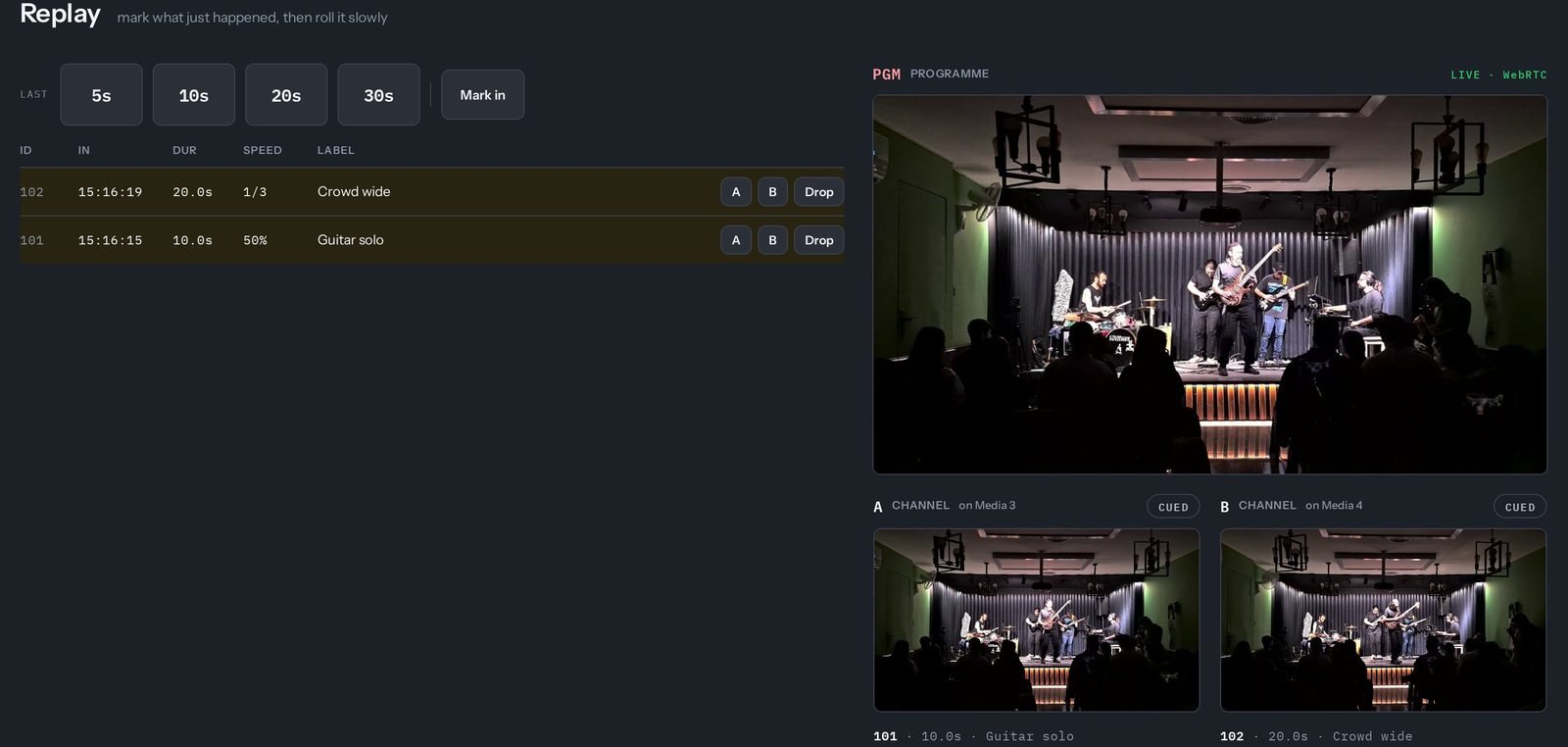
Instant replay
Mark the last few seconds, every angle on the same frame, any speed, true slow motion from high-frame-rate cameras, and reels.
Multiview
Broadcast layouts with tally and meters, in the browser over WebRTC, on a gallery screen over NDI, or as an output of its own.
Master control
Primary and backup failover, self-healing inputs, EBU R128 or ATSC A/85 loudness, alarms in plain English and an as-run log.
FAST and playout
Playout decks, a rundown from the library, traffic, SCTE-35 breaks, house-format conform, programme guide exports and HLS with ABR.
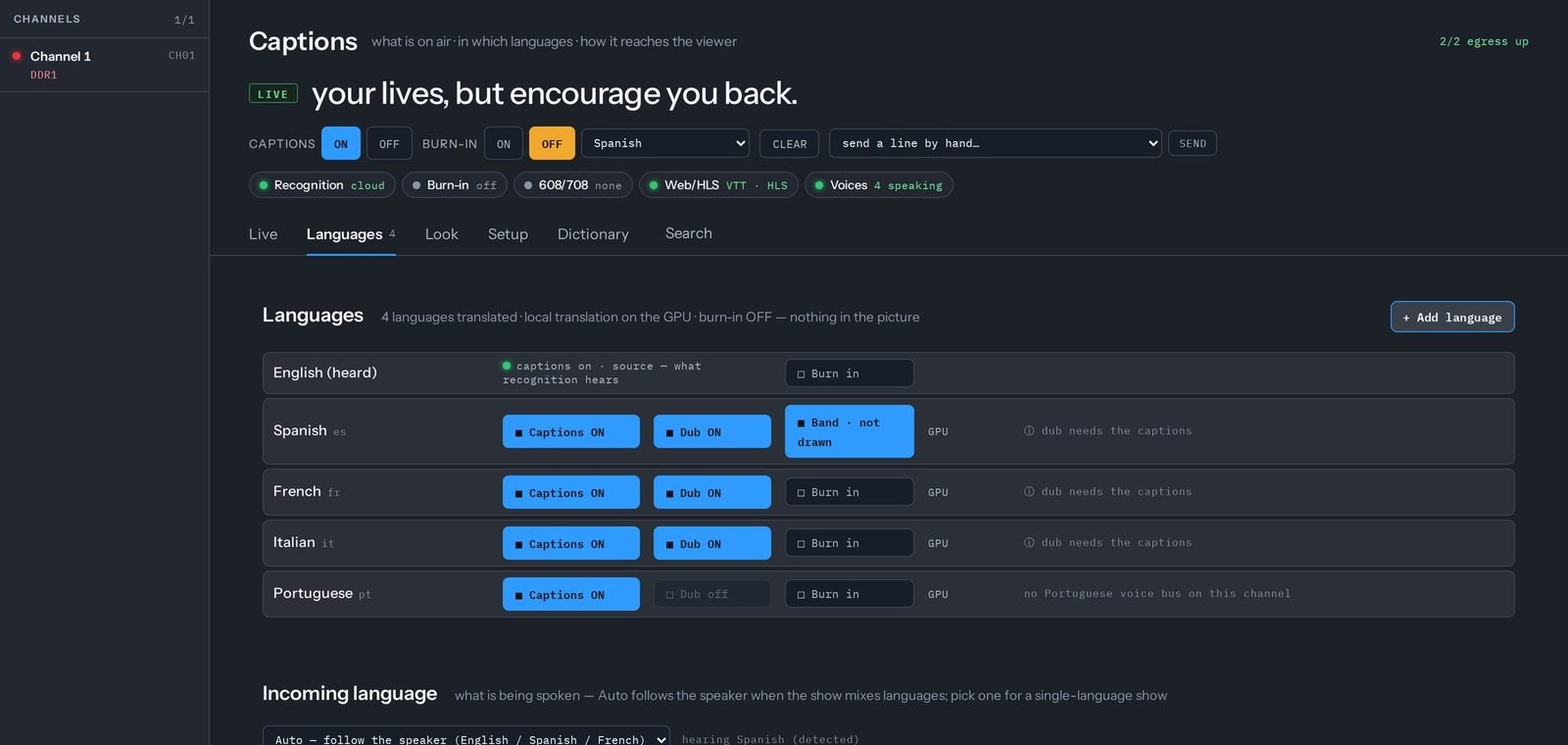
Captions and translation
Live CEA-608/708, WebVTT, HLS subtitles and burn-in, with 28 languages in the recognition catalogue, following the speaker when the language changes.
AI voices
A dubbed track per language, mixed like an interpreter under the speaker, on the desk and on every output, and labelled as AI.
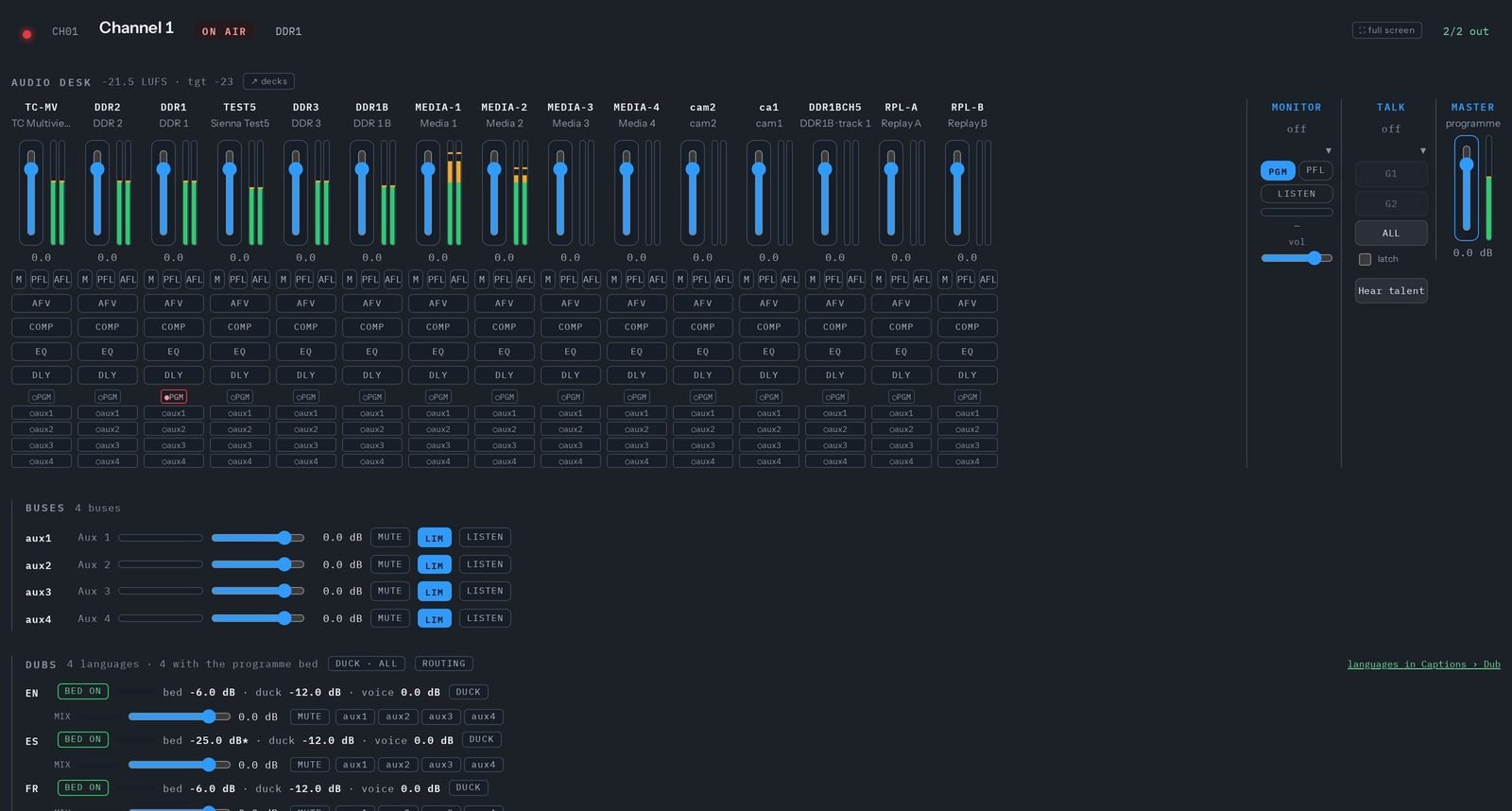
Audio desk
A strip for every source, buses, follow mixes, international clean and a 5.1 programme with AC-3 delivery.
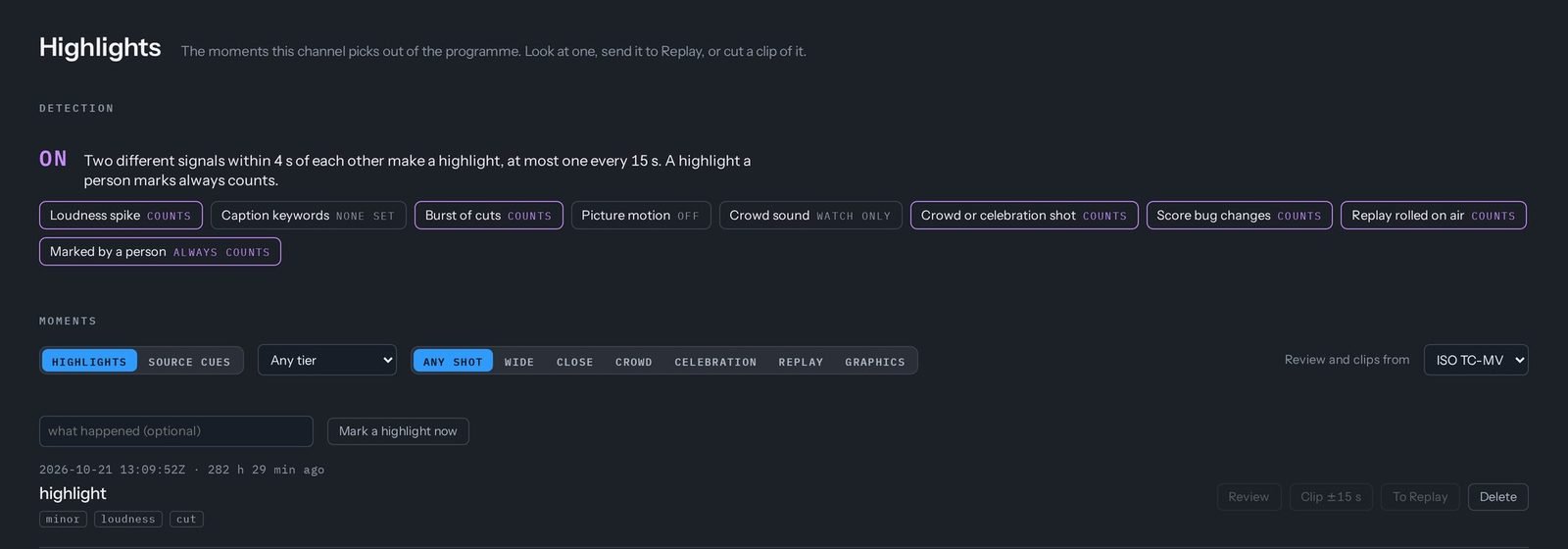
Recording and highlights
Programme and ISO recording, quick clips, and a Highlights page that says why each moment was picked.
Sources and outputs
SRT, RIST, RTMP, NDI, HLS and WebRTC in, browser guests from a link, and SRT, RTMP(S), HLS and NDI out, added or dropped on air.
Scale out
Start with one box, then add render, transcode, AI, ingest and NDI matrix nodes. Logins, roles, an API and a Companion module are built in.
Inside the panel
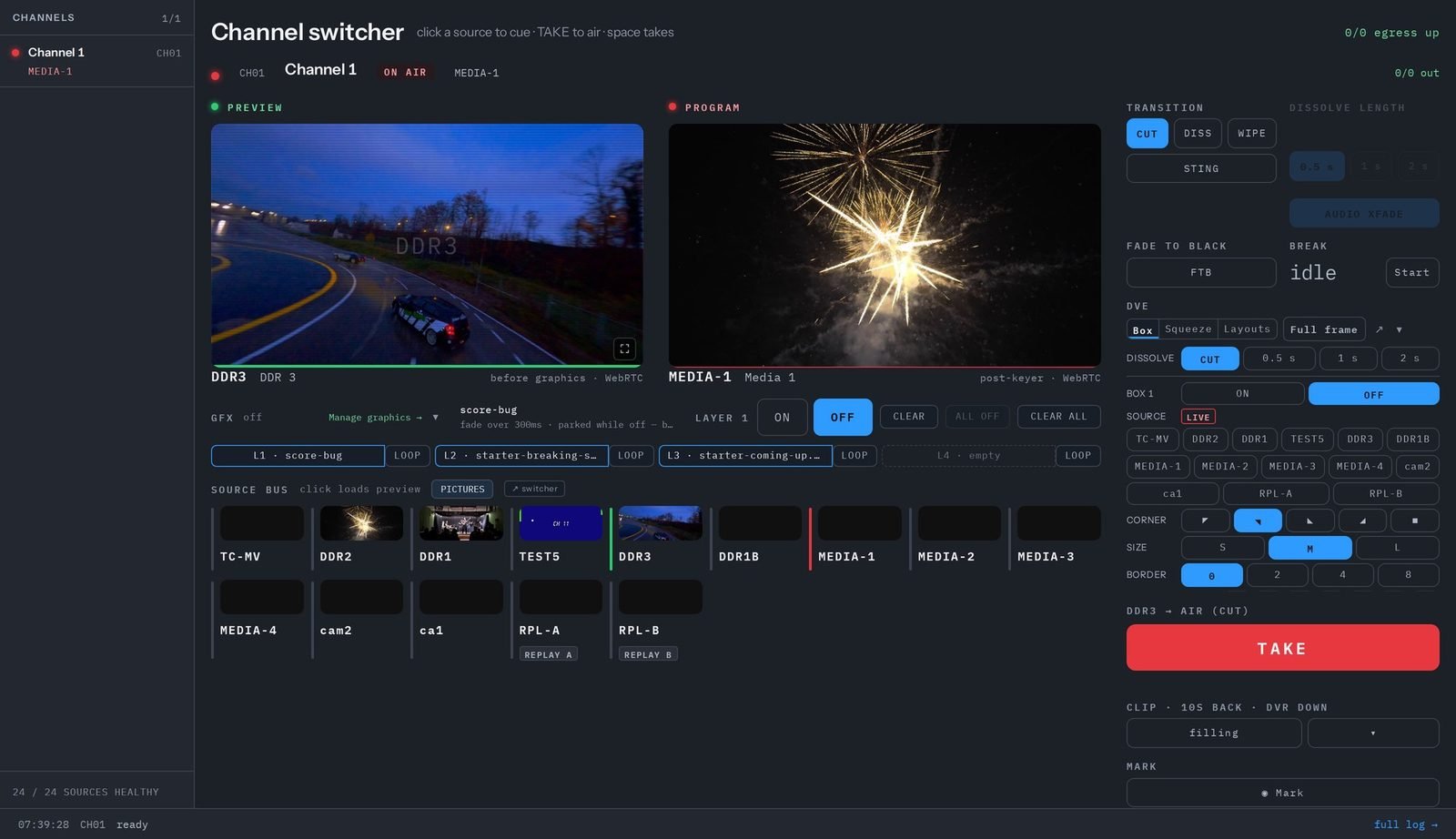
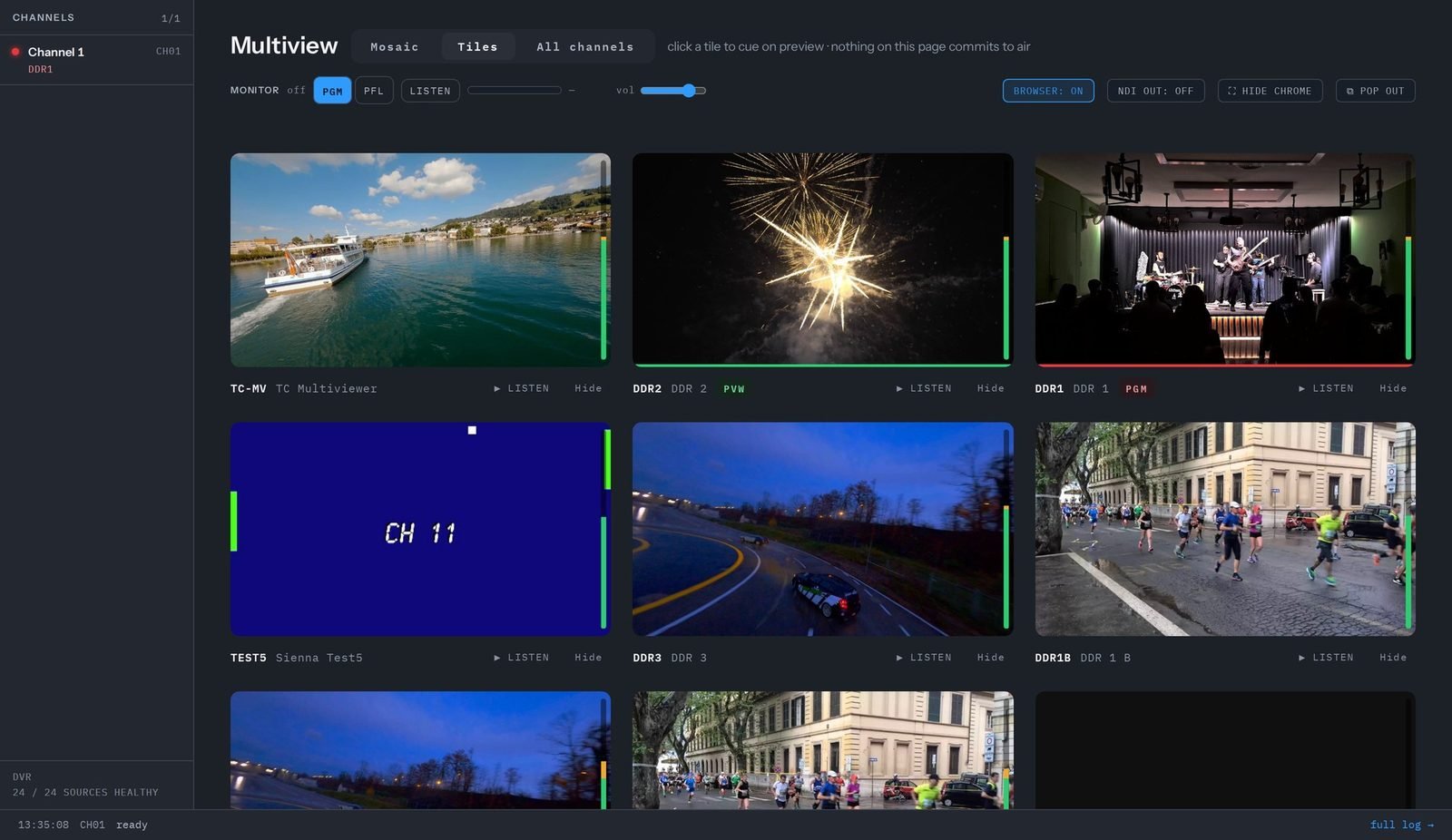
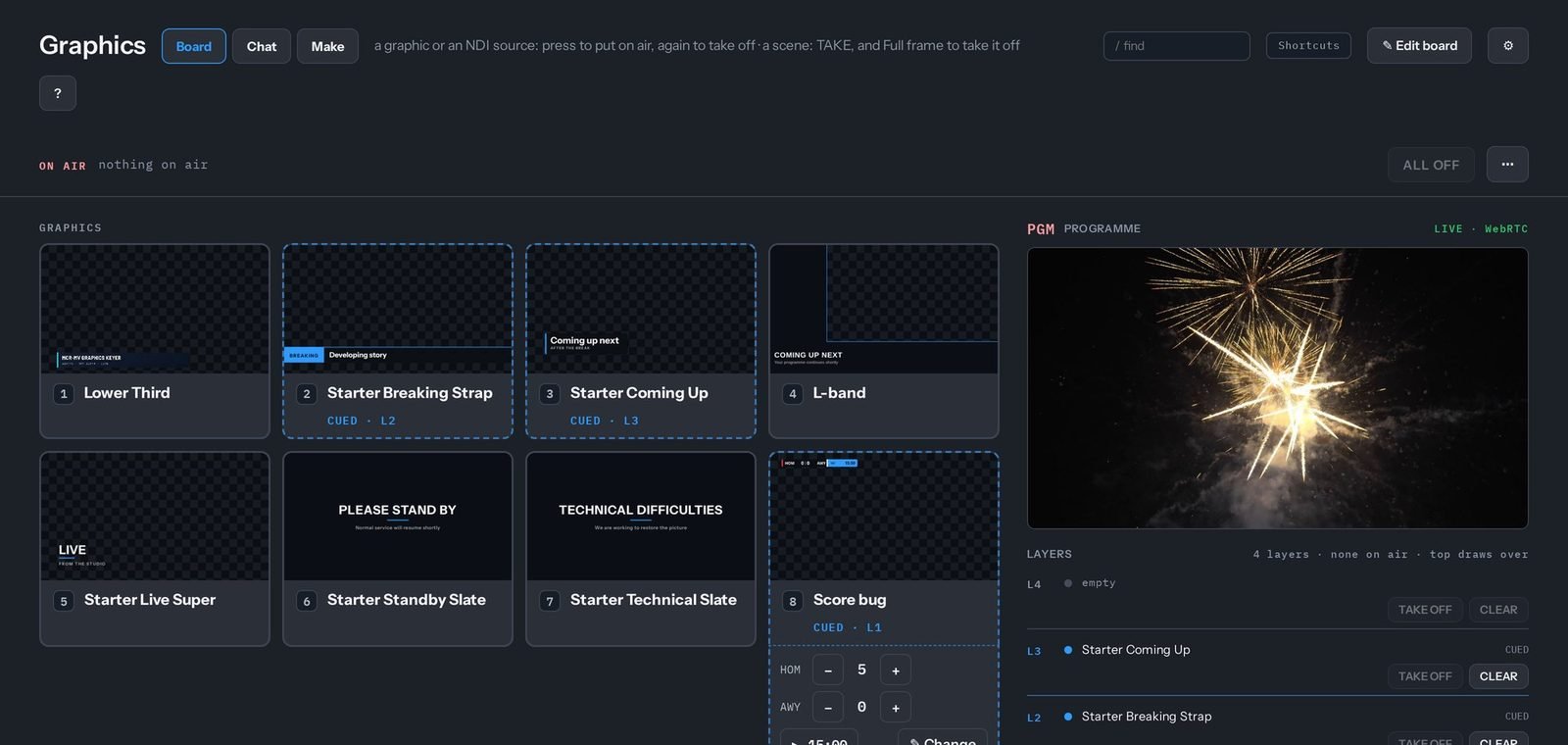
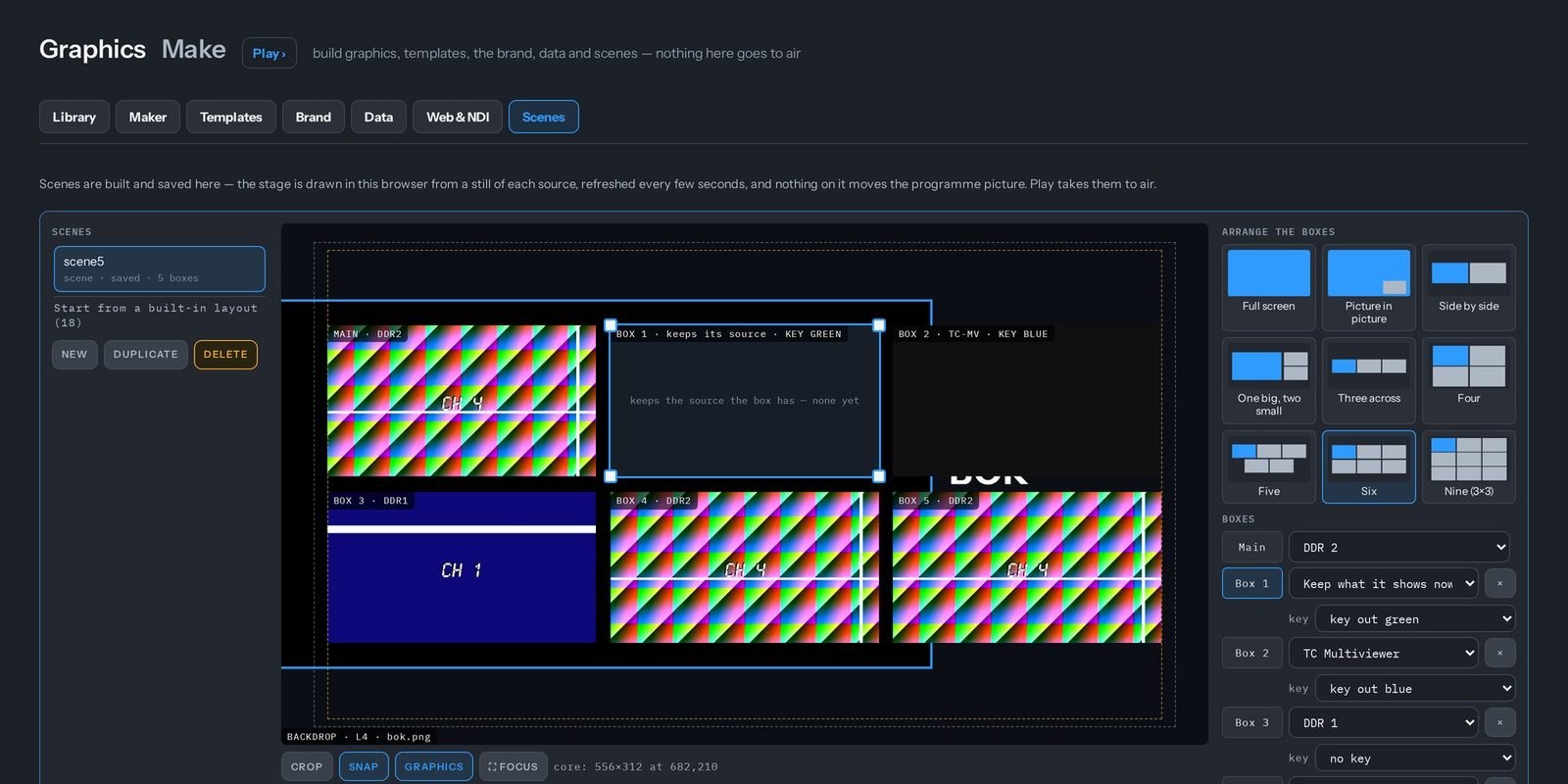
Runs on CPUs, with AI where you choose
Switching, graphics, the audio desk, recording, replay and every output run on ordinary CPUs, in the cloud or on your own servers. Operators and remote guests install nothing.
Speech recognition, translation and voices run locally on an NVIDIA graphics card, or through cloud providers with your own API keys, chosen per service. With every service local, programme audio never leaves your network.
Locally, translation from English covers 7 languages and voices cover 8, so a fully local dub works in five: Spanish, French, Italian, Portuguese and Mandarin. Other languages use cloud services. Recognition accuracy has been measured for English and Spanish so far.
Read the whole guide
The feature guide covers every feature area in 42 pages, with what is still being proven marked as it is.